If you are heading to Etosha then you are in for a wildlife experience like no other, with a giant salt pan at its heart this arid, dry, flat, vast park showcases African wildlife unlike anywhere else!
To make sure you get the most from your trip here is some essential and useful information about visiting Etosha National Park - Namibia's wildlife paradise. If you are looking for where to stay click here
Where is Etosha National Park
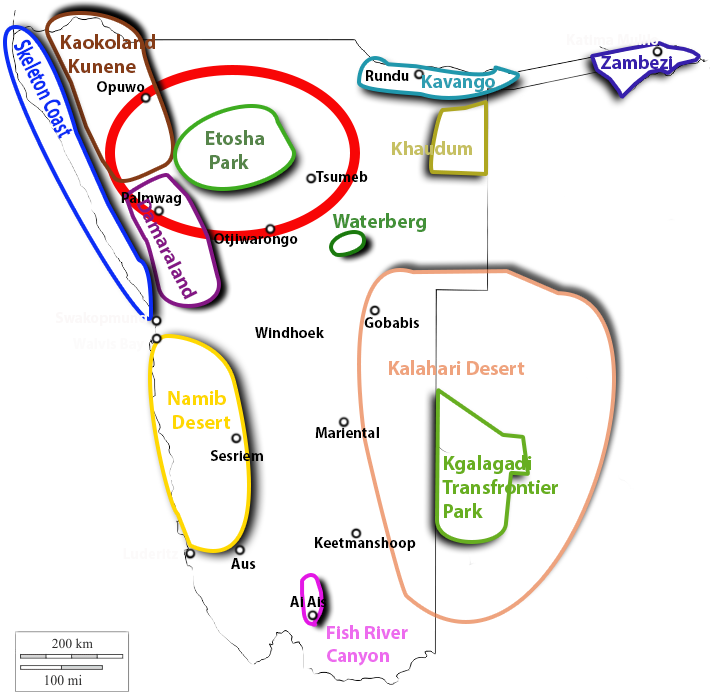
Etosha National Park is located above the tropic of Capricorn in the centre of northern Namibia, the
nearest towns to Etosha are Outjo, Tsumeb, Otjivelo and Khorixas.
Etosha is north of Windhoek (Namibia's Capital city), and northeast from the coastal towns of
Swakopmund
and Walvis Bay, west from Tsumeb and Grootfontein and southwest from Rundu and the Caprivi
region.
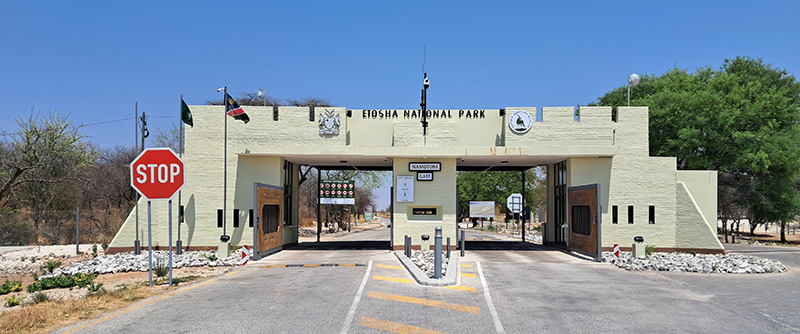
There are 4 entrance gates into the park:
Galton Gate on the east side best access to Dolomite Resort and Olifantsrus Camp from
Swakopmund, Walvis Bay and Damaraland.
Ombika Gate (previously known as Anderson gate) best access to Okaukuejo and Halali Resorts
from Windhoek, Swakopmund and Central Namibia. Namutoni Gate best access to Namutoni Halali
and Onkoshi Resorts from Windhoek or Tsumeb.
King Nehale Gate closest access to Onkoshi Resort from Northern Namibia.
How do I get to Etosha National Park
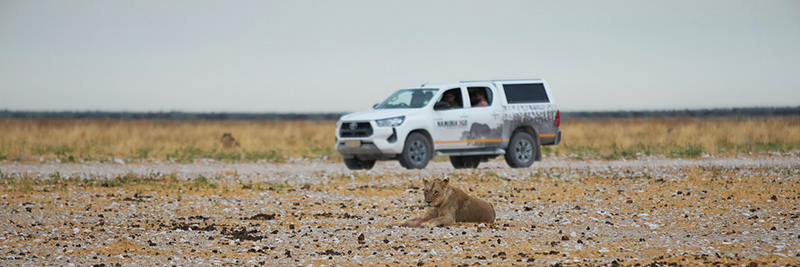
Driving a vehicle (either your own or a rental vehicle) is the best way to get to Etosha.
There are tar roads from all the major areas of Namibia to Etosha Park and the best way to
experience Etosha is by self driving around the waterholes
Having your own vehicle allows you the freedom of setting your own timetable and going wherever and whenever you want.
What if I can't drive or rent a car?
Private transfer There are companies that will provide a private transfer service that will pick up and drop you off at your requested locations, this can be quite expensive due to the long distances but a very effecient way to get from place to place as long as you use a reliable company. Also remember that you will then need to book and pay for game drives into Etosha Park from your accommodation.
Go2 shuttle A reliable and cost effective shuttle service that covers much of Namibia. It leaves at set times and has a set route so you still have to get to the pick up point and drop off is at a designated lodge, so if you are staying at another lodge you will need to organise and pay for transfer to that accommodation. NOTE there is no Uber/Lyft or even taxi services in the areas around Etosha and again you will need to organise game drives with your accommodation to go inside Etosha Park.
Book a trip There are several companies offering overnight trips to Etosha Park these can be group trips (sharing with other people) or private guided trips. Camping and accommodated safari trips are available. This can be a great way to experience Etosha but obviously there is a higher cost involved.
What are Etosha Parks opening hours
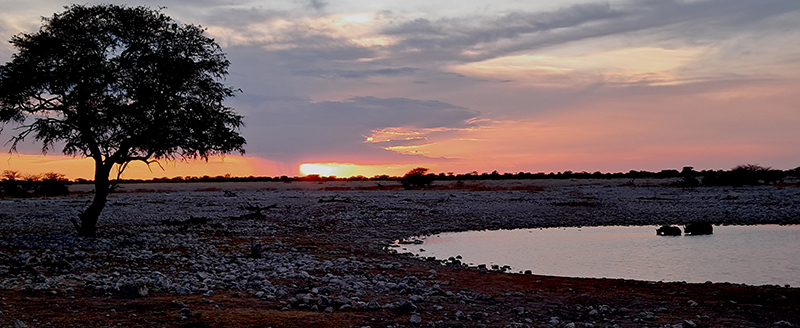
Etosha Park opens at sunrise and closes at sunset.
As a guide Etosha Park opens at 06h30 in the morning and closes at 06h30 in the late afternoon.
However this varies with the season through the year, the exact time is posted at the exit gate of
each camp inside of Etosha, if in doubt ask at the reception.
DO NOT rely on other visitors to tell you!
What about camp closing times?
Accommodation inside Etosha Park- All 6 places to stay inside Etosha Park (Okaukluejo Resort,
Halali Resort, Namutoni Resort, Onkoshi Resort, Dolomite Resort and Olifantsrus Camping), all also
open at sunrise and close at sunset.
Accommodation outside Etosha Park If you are staying outside of the park you can enter the park at sunrise and you must exit the park by sunse
What if I arrrive late? This depends on how late you arrive at the camp or exit gate. If you
are a few minutes late you may just get a telling off with a warning (they may also fine you),
repeat offenders will get a fine.
If you are very late the gate will be closed and they will need to call a manager to allow you
in/out, in general this will result in a fine. A repeated late arrival can result in being banned
from ALL of Namibias national parks.
What if I am booked inside the park and arrive late at the gate? each gate has a time limit on when they will let you enter the park in relation to where you are staying, if there is not enough time to reach the resort where you have a reservation before sunset they will not let you enter the park.
Etosha Park Entry Fees
Etosha National Park entry fees and prices
- Prices are per person per day in Namibian Dollars (NAD).
Adults (foreign) NAD 150 per adult per day
Children (foreign) NAD 100 per child per day (9 to 16 yrs)
Adults (SADC) NAD 100 per adult per day
Children (SADC) NAD 50 per child per day (9 to 16 yrs)
Adults (Namibian) NAD 50 per adult per day
Children (Namibian) no charge (9 to 16 yrs)
Vehicles with 10 seats or less are NAD 50-00 per vehicle per day
Vehicles with 11-25 seats are NAD 100-00 per vehicle per day
Vehicles with 26-50 seats are NAD 400-00 per vehicle per day
Vehicles with 51+ seats are NAD 700-00 per vehicle per day
How the entry fees into Etosha work. Fees are valid for a 24 hour period beginning at the time
of entry into Etosha Park.
Park fees are payable for every day for people AND vehicles.
Minimium payable is 24 hours (no half day fees).
Fees are non refundable and not transferable.
Where do I pay Etosha Park entry fees? Etosha Park fees are collected by the Ministry of Environment, Forestry and Tourism and not Namibia Wildlife Resorts (who run the accommodation inside the park).
The Ministry of Environment, Forestry and Tourism has offices at Galton Gate, Okaukuejo Resort and
Namutoni Resort which is where you need to pay the park fees.
Here is a breakdown of where to pay park fees based on where you are staying:
When you are staying at Okaukuejo Resort or Namutoni Resort you pay the park entry fees at the
Ministry of Environment, Forestry and Tourism desk that is located at reception area of each resort,
this is a separate desk to where you check in for your accommodation but in the same office.
Staying at Dolomite Resort or Olifantsrus Campsite Neither of these places to stay have a Ministry of Environment, Forestry and Tourism office so you need to pay your park fees at the Galton Gate if coming on from the west or at Okaukuejo Resort if coming from the east of Etosha.
Staying at Onkoshi Resort You need to visit the MEFT desk in the reception area of Namutoni Resort.
Staying at Halali Resort To pay your park fees if coming in Ombika/Anderson gate you need to call in at Okaukuejo Resort to the MEFT desk in the reception area of the camp or if coming in the Anderson Gate you need to call in at Namutoni Resort and visit the MEFT desk at the reception area the
Staying outside Etosha Park If you are staying outside the park you will need to visit the closest MEFT desk to your entry point, from the south Anderson/Ombika gate this is Okaukuejo, from the east this is Namutoni.
How long should I stay in Etosha
What is your purpose for visiting Etosha? Just love wildlife? You couldn't be in a better location, the sights and sounds of Etosha are a wildlife enthusiasts dream. Minimium 3 nights - maximum as much as you can.
Are you visiting for the experience of seeing the amazing wildlife that roams Etosha? If you
want the experience of seeing, hearing and smelling true African wildlife in a natural setting then
2 or 3 nights is enough for many people, this gives time for 3 or 4 game drives and time spent at a
night lit waterhole and with a bit of good planning should give you a good chance of seeing most of
the main animals of Etosha.
As part of a general trip around Namibia, 2 or 3 nights will work nicely.
Do you want to see particular animals? Depending on how rare the animals you want to see are
the longer you may need to stay to see them. If you want to see Zebra, Springbok, Wildebeest or Oryx
then you could tick them off on the drive from the gate to the camp, but as you start to add
Elephant and Rhino you will need at least 2 nights then include Lion, Hyena and Cheetah and you will
need even more time.
Etosha is completely wild and game driving while you can get better results with planning still has
an element of luck involved, simply put the more time you spend game driving in the right places the
more you will see
Looking to capture some great photos or video for your social media? The animals of Etosha are always happy to feature on social media but you will still have to be out and about to find them - especially the more elusive animals, if you are looking for pics for your socials then a 2 night stay will be enough to take some nice photos on the game drive, animals out and about at the waterhole, round the fire at the campsite and some night lit photos at the waterhole.
Is bird spotting the main reason? General bird spotting in Etosha is quite easy as long as you have a bird book and a good pair of binoculars because the open flat areas give good visibility and low vegetation offers few options for birds to settle. Of course if you are after a particular bird then rarity and seasons play a big role. General birding 2 to 3 nights.
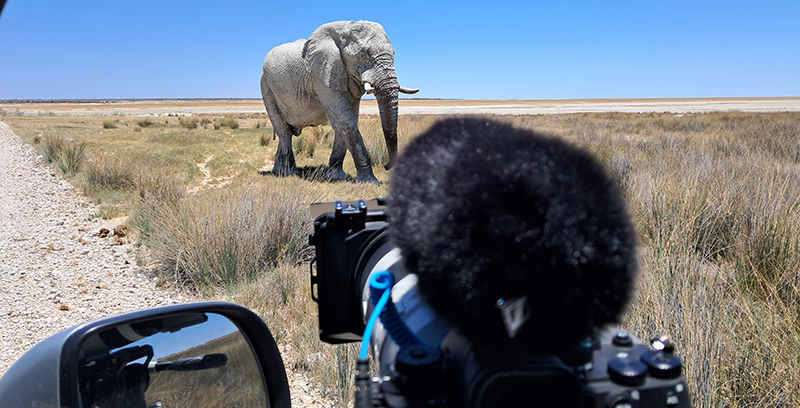
Getting that shot Photographers and Videographers love Etosha for the reasonably easy viewing of the animals but fight with the bright conditions and inability to get out of the vehicle or reposition. 3 nights would be a minimum to as long as you can stay, the longer you stay (especially in one area) the more opportunities you will have to capture special moments.
What wildlife can you see in Etosha Park
Which animals survive in this barren desert area?
Mammals of Etosha There are an amazing 114 different types of animals that call Etosha
National Park home.
The most common animals to see in Etosha: Zebra, Wildebeest, Giraffe, Warthog, Impala, Springbok,
Steenbok, Black-backed jackal, Oryx, Steenbok, Hartebeest, Kudu.
Etosha animals spotted frequently Elephant, White Rhino, Lion, Spotted Hyena, Mongoose, African Squirrel, Eland, Damara Dik Dik, Bat eared Fox.
More elusive animals Black Rhino, Leopard, Cheetah, Sable, Brown Hyena, Honey Badger.
Rarely spotted but still there Aardwolf, Pangolin, Serval.
What about birdlife in Etosha Park?
Etosha Park is an excellent place for bird spotting with over 300 species living in the park year
round plus an over 100 additional summer visitors.
What makes the bird viewing so special is the broad spectrum of bird types, including the largest
flying bird in Africa, the Kori Bustard, Africa's most colourful bird, the Lilac Breasted Roller and
even Flamingoes!
The unique environment of Etosha and the large salt pan attract these diverse birds to the park. It
is a great place to tick of lots of those unusual birds in the birdbook.
What is the best time to visit Etosha
Which are the best months to experince Etosha?
May, June, July, August and September This is the driest time in Etosha resulting in large
herds of animals congregating around the waterholes with low grass and open vegetation, these months
offer the clearest and easiest game viewing in Etosha, simply waiting at a waterhole will allow you
to see a lot of animals.
However it is the busiest time of year in Etosha, prices go up and availability goes down, you need
to book well in advance to secure the best places to stay during these months.
April and November: These can be the best two months of the year to visit Etosha, prices will
be at their lowest and there are less visitors to Etosha.
In April the heat is cooling down from its summer highs and in November its warming up from the
winter lows. There is chance of some rain during these months.
January, February, March and December The hottest time of year in Etosha with daytime
temperatures hitting 35 to 40 (95 to 106) you definitely want to book accommodation with
airconditioning during these months.
It is also the rainy season so you need to prepare for rain and heat.
However it is the best time of year for birding in Etosha as there is an influx of migratory birds
into Etosha, the smell of the savannah after the rains is delicious, the animals interact more,
Etosha is transformed from a dry dusty, grey/brown land to a green, vibrant vista and there are
fewer visitors. You will still see plenty animals.
Can I drive myself inside Etosha Park
Yes
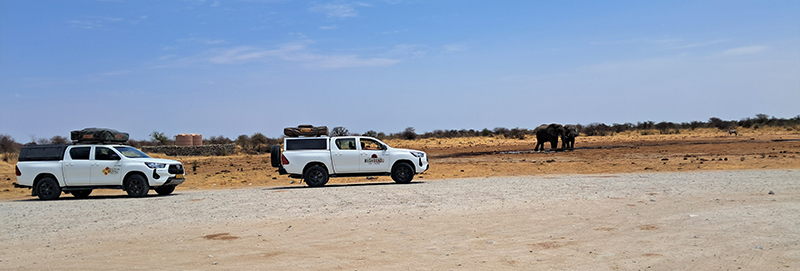
You can absolutely self-drive in Etosha National Park in Namibia - one of Africa's few parks that
allows and encourages self driving for an immersive safari experience.
It's a highlight for many visitors, with opportunities to spot elephants, lions, rhinos, zebras, and
more at waterholes along the routes.
Key Rules for Self-Driving Stay in your vehicle at all times during game drives, except at
rest camps and designated toilet spots.
Speed limit Strictly 60 km/h on all gravel roads to protect wildlife and avoid fines, to spot
wildlife a slower speed of 20 to 40km/h is best.
No off-roading Stick to marked roads only, going off road can harm the environment and
violations can result in vehicle impoundment.
Park hours Gates open around sunrise (typically 6:30 AM) and close at sunset (around 6:30 PM
in September/October—check exact times at entry).
You can't drive after closing
What type of vehicle do you need to drive in Etosha?
Do you need a 4 wheel drive? No - although most of the roads inside Etosha Park are gravel
with care you can still drive through the park in a normal 2wd sedan car but be prepared for slower
driving and limited access in some seasons and possible damage to low ground clearance cars.
However we recommend a bigger bakkie/pickup/suv for a more comfortable experience as the roads can
get corrugated and bumpy and for better game viewing because the smaller sedans are lower causing
the view to be obstructed by even short grass.
How about guided game Drives
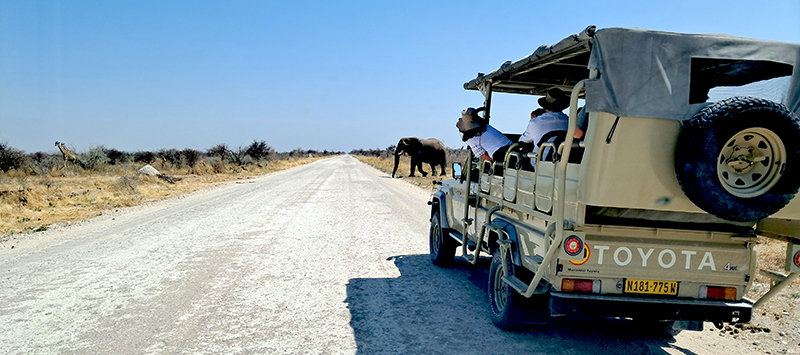
Game drives inside Etosha Park are an excellent addition to self driving yourself around Etosha, a
good guide can add more knowledge about the wildlife and should know the best route to spot animals,
they also run in open vehicles giving you great views.
Also the camps inside Etosha offer night drives that are not available for self drives.
How do you book a guided game drive
Inside Etosha you can book guided game drives at all 6 camps (Onkoshi, Namutoni, Halali, Okaukuejo, Olifantsrus and Dolomite) to book these you go to the reception area where you check in and talk to the NWR staff.There can be high demand for these trips so we recommend booking as soon as you arrive.
Where to stay inside Etosha Park
There are only 6 places to stay INSIDE Etosha Park
Okaukuejo Resort - largest most central
Halali Resort - best Rhino area
Namutoni Resort - by the old Fort
Onkoshi Eco Lodge - on Fischers Pan
Dolomite Eco Resort - on the far west side
Olifantsrus Camping - the only camp hide in Etosha
All the accommodation inside Etosha Park is run by Namibia Wildlife Resorts
Okaukuejo Resort The main camp inside Etosha Park Okaukuejo is the largest camp and is famous
for its night lit waterhole that attracts many animals day and night.
Types of accommodation available at Okaukuejo Resort
Premier Waterhole Chalets
Waterhole Chalets
Bush Chalets
Rooms
Camping Site
Family self catering cottage
Halali Resort Located in the south central area of Etosha Park Halali Resort has the best
access to the most waterholes inside the park, it also has a great night lit waterhole that you can
view from inside the camp.
Types of accommodation available at Halali Resort
Bush Chalets
Rooms
Camping Site
Self Catering Chalet
Namutoni Resort
On the east side of Etosha Namutoni Camp is built around an historic white fort and looks out over
the large flat plains towards Etosha Pan, the best area for Lions and Cheetah, there is a night lit
waterhole to sit at.
Types of accommodation available at Namutoni Resort
Bush Chalets
Rooms
Camping Site
Onkoshi Eco Resort Etoshas first eco resort Onkoshi is built looking directly over the Etosha
Pan. It is built on stilits to allow the water to come right up to the resort and to have minimum
impact on the envoriment. There is no night lit waterhole at Onkoshi but the resort is UNFENCED
allowing for animals to walk right through Onkoshi Camp.
There is only one type of accommodation at Onkoshi Resort
Private Chalets on Stilts
Dolomite Eco Resort The only non camping accommodation on the quiet and remote west side of
Etosha Park Dolomite is an eco camp located on a rocky dolomite outcrop giving beautiful views over
Etosha Park, it is an UNFENCED camp and does not have a night lit waterhole.
Types of accommodation available at Dolomite Eco Resort
Deluxe Chalets
Bush Chalets
Olifantsrus Camping In remote west side of Etosha Park Olifantsrus is a camping only
experience with a two tier hide accessable from inside the camp that gives unique game viewing
opportunities.
Type of accommodation available at Olifantsrus
Camping Site
Booking Etosha in advance
Do I really need to book? Etosha Park
There are only 6 places to stay inside Etosha and none of them are very big so they can fill up for
large parts of the year. All the accommodation inside Etosha Park is run by Namibia Wildlife Resorts
Busy Season Peak - May, June, July, August, September and October Chances of turning up and finding somewhere to stay inside Etosha Park same night - slim to none. This is when the weather is at its best and is the busiest time for visitors in Namibia, the resorts and camps inside Etosha book up long in advance, popular types of accommodation book up over a year in advance so yes you need to book well in advance for these months.
Shoulder Months - April and November Chances of turning up and finding somewhere to stay inside Etosha Park same night - 50/50. While not the busiest time of year the resorts inside Etosha can still fill up on some dates also you will be limited to whatever is available which is often either camping or the most expensive accommodation
Low Season - December, January, February and March Chances of turning up and finding somewhere to stay inside Etosha Park same night - reasonable. Despite being the hottest time of year and the highest chance of rain Etosha is still popular during these months, if you want a particular resort and type of accommodation we still recommending booking in advance.
Places to stay outside Etosha Park
There are only 4 entrance gates into Etosha Park: King Nehale Gate in the north, Namutoni Gate on the east, Anderson/Ombika Gate on the south and Galton Gate in the West.
Places to stay outside Etosha near King Nehale gate:
Etosha King Nehale Lodge
Places to stay near Namutoni Gate:
Onguma The Fort
Onguma Bush Camp
Onguma Forest Camp
Onguma Tented Camp
Onguma Tamboti Luxury Campsite
Onguma Leadwood Campsite
Onguma Camp Kala
Onguma Trails Camp
Mushara Lodge
Mushara Bush Camp
Mushara Outpost
Villa Mushara
Mokuti Lodge
Emanya Lodge
Sachsenheim Guestfarm
Places to stay outside Etosha near Anderson/Ombika gate:
Etosha Village
Andersons at Ongava
Little Ongava
Ongava Tented Camp
Ongava Lodge
Etosha Trading Post
Eldorado Lodge
Etosha Safari Camp
Etosha Safari Campsite
Etosha Camping 2go
Etosha Lodge
The Ekipa
Toshari Lodge
Mondjila Tented Camp
Etosha Omusati Lodge
Galton Gate Places to stay outside Etosha near Galton gate: Hobatere Lodge, Etosha Roadside Camping
Is Etosha Safe to visit

Practical Safety tips for Etosha Park
Etosha National Park is considered safe to visit provided you follow the rules and use common sense. Thousands of travellers (self-drive and guided) visit every year without issues. Here’s a breakdown
🦁 Wildlife Safety Stay in your vehicle outside designated areas. Wild animals (especially elephants, rhinos, and big cats) can be unpredictable and dangerous if approached on foot. Do not feed or attract animals. This can be dangerous for you and harmful to them. Keep windows mostly closed when near lions, elephants, or baboons.
🚗 Driving Safety Roads are gravel inside the park but well maintained; drive slowly (speed limit 60 km/h) to avoid accidents and improve game viewing. Watch for animals crossing the road, especially at dawn and dusk. Don’t drive after gates close — you must be inside your camp by sunset.
🏕️ Inside Camps Etosha camps (Okaukuejo, Halali, Namutoni and Olifantsrus) are fenced and secure. You can walk around safely inside, including to waterholes. At night, you’ll hear animals close by, but they can’t enter the fenced camps (take a torch). Onkoshi and Dolomite Eco Resorts are not fenced so you must take extra precautions walking around at all times, after dark ask a staff member to walk you to your room.
🦟 Health & Environment Malaria risk is low but present in Etosha, especially in the rainy season (Nov–Apr). Insect repellent is recommended. Summer temperatures can exceed 35–40 °C, so carry water, sun protection, and hats.
👮 Rules & Enforcement The park is well regulated by the Ministry of Environment, Forestry and Tourism. Rangers patrol and enforce rules. As long as you stick to official areas, obey speed limits, and don’t get out of your vehicle in the wild, Etosha is one of Africa’s safest safari destinations.
Top 5 Safety Mistakes in Etosha
Getting out of your vehicle in the wrong place Outside of designated rest stops or viewpoints, stepping out is illegal and very dangerous. Predators, elephants, or even snakes can be closer than you think.
Driving too fast The park speed limit is 60 km/h, but many accidents happen because visitors rush between camps. You risk collisions with animals (zebra, springbok, elephants) or missing sightings.
Leaving camp late / returning after gate closure Each camp has strict opening/closing times (usually sunrise to sunset). Missing these can result in fines — or being locked out overnight, which is dangerous.
Approaching animals too closely Some visitors creep right up to elephants, rhinos, or lions for photos. This can provoke charges or stress the animals. Always keep a safe distance - your zoom lens is your best friend.
✅ If you avoid these mistakes, Etosha is one of the safest and most enjoyable safari parks in Africa.
Malaria in Etosha
Etosha National Park does have mosquitoes all year chances of malaria decrease severely in the dry winter season from May to October.
Preventative measures are key
Sleep under a mosquito net (provided in most camps).
Use strong insect repellent (DEET or picaridin-based).
Wear long sleeves and trousers after dusk.
Keep doors and windows closed in your room/chalet.
✅ Bottom Line Etosha is not a high-risk malaria hotspot, but the risk exists year-round, especially in the rainy months. Most travel doctors will advise prophylaxis. Chat to your own doctor for appropriate advice.
What makes Etosha Pan special
The Etosha Pan
🌍 Size & Scale
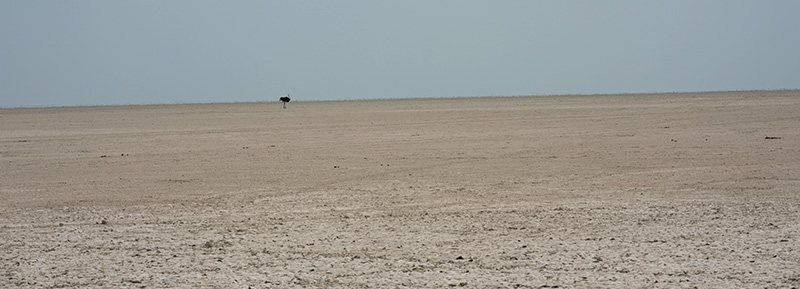
Covers about 4,800 km² — so big it can be seen from space.
Flat, shimmering white surface creates a surreal, lunar-like landscape.
Makes up nearly a quarter of the entire park’s area.
💧 Seasonal Transformation Dry season (May–Oct): The pan is a cracked, dry salt flat, reflecting light so strongly it looks like water (a mirage effect). Rainy season (Nov–Apr): Parts of the pan fill with shallow water, attracting huge flocks of flamingos and pelicans.
🐦 Flamingo Spectacle Tens of thousands of lesser and greater flamingos migrate here to feed and, in good years, breed. This is one of southern Africa’s rare flamingo breeding sites, though it only happens when rainfall is high enough.
🐘 Wildlife Magnet Surrounding the pan are natural springs and waterholes. In the dry season, these are lifelines where elephants, lions, giraffes, rhinos, and antelopes gather in huge numbers - offering some of the best game viewing in Africa.
🌌 Scenery & Atmosphere The pan’s vast openness creates dramatic horizons and sunsets. On windy days, fine salt dust creates shimmering mirages, adding to the sense of being in an endless desert. Photographers love the stark contrasts: white pan, blue sky, and colourful wildlife.
✅ Etosha Pan is not just a landscape, it’s the heartbeat of the park’s ecosystem - a seasonal desert-lake that supports life in a fragile, spectacular way.
Best waterholes in Etosha Park
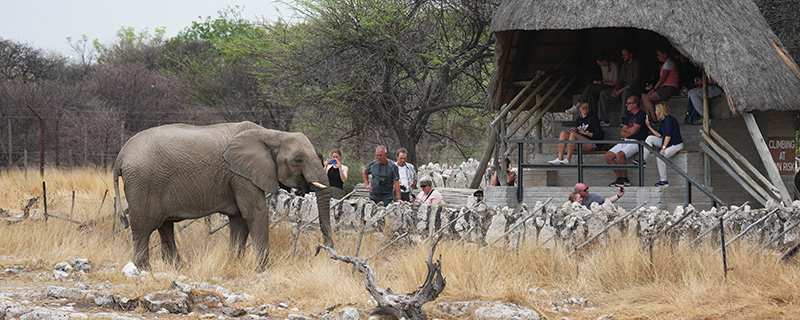
Waterholes are the heart of Etosha especially in the dry season when nearly all wildlife depends on them. Each has its own “character” and draws different animals. Here are the best and most famous waterholes in Etosha National Park
Okaukuejo Waterhole (in Okaukuejo Camp) Most famous in the park — floodlit at night. Regular sightings of black rhino, elephant herds, lions, giraffes, and antelope. One of the best places in Africa to watch wildlife behaviour up close after dark.
Halali Waterhole (Moringa) (in Halali Camp) Natural rock amphitheatre, also floodlit at night Good chance of spotting leopard, plus elephant, hyena, and rhino. Quieter than Okaukuejo → more intimate feel.
Klein Namutoni & Chudop (near Namutoni Camp)
Chudop: Excellent for elephants, giraffes, and big cats.
Klein Namutoni: Productive for lions and large herds of antelope.
Located in the eastern section which is generally greener with more birds.
Nebrowni (close to Okaukuejo) Large, open waterhole surrounded by plains → ideal for massive herds of zebra, springbok, and elephants. Predators often lurk nearby.
Gemsbokvlakte (south of Okaukuejo) Wide, open setting with dramatic landscapes Great for elephant herds and predators Popular with photographers for clear backgrounds.
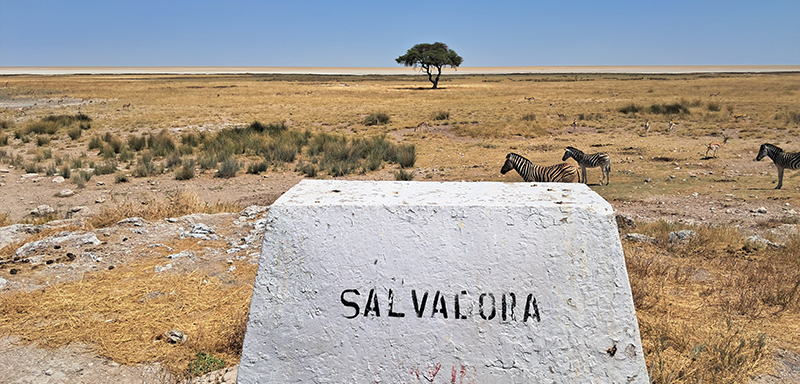
Salvadora & Sueda (along the pans edge, east of Okaukuejo) Beautiful setting right on the edge of Etosha Pan. Known for cheetah sightings, as open plains make hunting easier.
Rietfontein (between Okaukuejo & Halali) Large natural spring. Elephants, giraffes, and antelope are common; lions often wait here too.
Goas (near Halali) Large natural spring. Good for leopard, elephants, and herds — sometimes quieter but rewarding.
Fisher’s Pan (near Namutoni) Seasonal, best in the rainy season. Spectacular for flamingos, pelicans, and other waterbirds when flooded.
Olifantsbad (between Okaukuejo & Halali) Scenic spot with mopane trees. Frequented by elephants, lions, and rhinos.
🌟 Summary Best all-rounder: Okaukuejo (day & night action). Best for predators: Salvadora, Sueda, Chudop, Halali. Best for elephants: Nebrowni, Gemsbokvlakte, Olifantsbad. Best for birds: Fisher’s Pan (wet season).
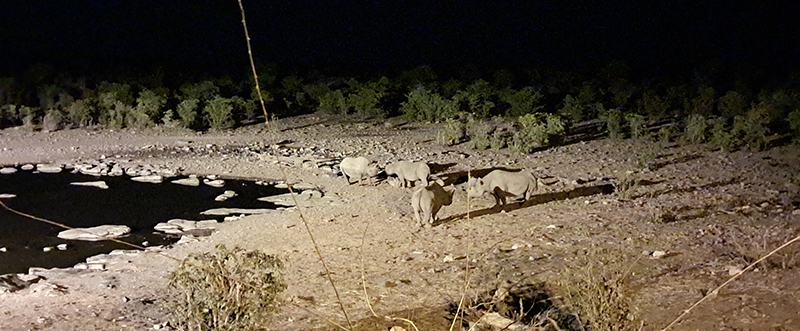
Seeing animals at night in Etosha
There are two ways to see animals at night in Etosha
1/ Stay at one of the Resorts inside Etosha that has a night lit waterhole:
Okaukuejo Resort has a waterhole that you can see from inside the camp that is lit at night.
Namutoni Resort has a waterhole that you can see from inside the camp that is lit at night.
Halali Resort has a waterhole that you can see from inside the camp that is lit at night.
Olifantsrus Campsite has a two level hide accesable from the camp that is lit at night.
2/ Take a guided night drive. Only available from the Namibia Wildlife Resorts Resorts inside of Etosha, book them as soon as you arrive as they are very popular.
Wildlife spotting tips
Sit at waterholes
By far the best way to spot and watch the wildlife of Etosha is to sit at a waterhole, these are
literally the life of Etosha, the dry harsh conditions mean that everything has to visit a waterhole
and drink - animals and birds, even wildlife that traditionally get their water from plants will go
to drink at waterholes on Etosha, this means that a couple of hours sitting at a waterhole will be
the best way to see all the animals in Etosha.
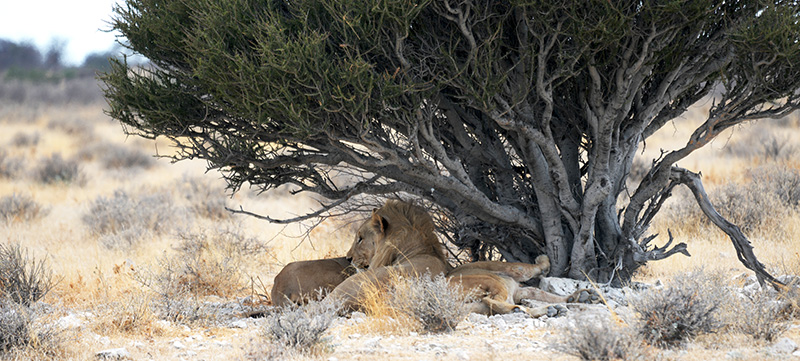
When you arrive at a waterhole scan the surrounding bushes to see if anything is hiding in the shade, this is a favourite place for Lion and Cheetah to hide from the sun.
Drive slowly The speed limit may be 60km/h but we recommend only going 20 to 30km/h so you can scan the bush this greatly increases your chances of spotting the rarer animals and birds.
Talk to people Most people are happy to share their experiences with you providing an insight as to where they saw differnet animals and it is a great way to make new friends.
Take binoculars Etosha landscape is flat and vast offering great long distance views to spot wildlife, however at a couple of kilometres distance over a hot shimmering pan it is impossible to make out different animals, a pair of binoculars helps spot distant wildlife, lets you scan under bushes all around and is essential for birding.